Composer, arranger and pianist Clare Fischer died Thursday, Jan. 26, his website has announced. He was 83. The L.A. Times reports that he died of complications from a heart attack suffered two weeks ago.
Fischer was a respected improvising pianist, but left his biggest mark behind the scenes as a composer, arranger and studio musician across idiom. “I’m not a pianist who writes — I’m a composer who plays,” he said on a February 2001 episode of Marian McPartland’s Piano Jazz, heard above. A few of his tunes, “Pensativa” and “Morning,” have entered standard jazz repertoire.
His first big break came while touring as pianist/arranger for the Hi-Los, a popular vocal quartet of its time. He was soon commissioned to arrange for various jazz artists, including Dizzy Gillespie on A Portrait of Duke Ellington. Fischer was known for his love of Latin American music and European classical music alike; he led and played in Latin jazz bands (especially with vibraphonist Cal Tjader), and wrote for strings and symphony orchestras. He was also tapped to write backing arrangements for myriad pop stars, including Chaka Khan and Rufus, Paul McCartney, Joao Gilberto, Brandy, Carlos Santana and Prince, often in collaboration with Brent Fischer, his son and a fellow producer/arranger.
“Each decade, I find myself being interested in something else,” Clare Fischer told McPartland. “So I pursue it.”
In that time, Fischer released 51 albums as a bandleader or solo pianist, spanning ensembles of all sizes and styles. One of his last — Continuum, a collection of works for big band — was nominated for a Grammy in November.
This weekend, we learned that the jazz businessman John Levy died on Friday. His wife, Devra Hall Levy, announced the news on Saturday in a press release available on John Levy’s website, Lushlife. He was nearly 100 years old.
Levy was once a musician of some renown — he played bass with Billie Holiday, Stuff Smith, George Shearing and many others — but he’s primarily remembered for his advocacy. He was named an NEA Jazz Master in 2006 for representing dozens of musicians as a manager, and also produced concerts and recordings.
According to Devra Hall Levy’s statement, John Levy’s clients included “Cannonball Adderley, Betty Carter, Randy Crawford, Roberta Flack, Herbie Hancock, Shirley Horn, Freddie Hubbard, Ahmad Jamal, Abbey Lincoln, Ramsey Lewis, Herbie Mann, Les McCann, Wes Montgomery, George Shearing, Dakota Staton, Stanley Turrentine, Joe Williams, and Nancy Wilson, who remains a John Levy Enterprises client to this day.”
Click here to hear a remembrance of Levy by NPR’s Sami Yenigun.
In 1974, trumpeter Jimmy Owens helped prepare and played on a Carnegie Hall concert of Thelonious Monk’s music. On the night in question, the orchestra featured a surprise soloist: Monk himself. It was one of the pianist’s last public performances. Thirty-eight years later, Owens has just been honored as a Jazz Master by the National Endowment for the Arts, and he has a new album of Monk compositions arranged for seven players, called The Monk Project.
In Monk’s lifetime, his pieces weren’t played so very often, and interpreters often smoothed away their idiosyncrasies. After Monk’s death in 1982, jazz players started paying more attention to his tunes’ specific quirks, to the point where musicians jamming on them might simply mimic their counterparts in Monk’s band. Something like that happens here, a little — tenor saxophonist Marcus Strickland sounds like he’s been studying Monk’s last great tenor, Charlie Rouse.
Owens’ septet epitomizes one modern approach to Monk, not too straight, not too quirky. He doesn’t ape Monk’s sound, but instead honors his method: Keep the melody in mind at all times, leave plenty of space so the music can breathe, and make it sound old and new at once — rooted in the masters, but freshly shuffled. Owens knows Monk’s tunes swing all by themselves, if you play them right. His funny timing catapults the music forward. When Monk recorded “Brilliant Corners,” a tricky tune even for him, he doubled the tempo every other time through the melody — a weird move, but good show business. Owens puts “Brilliant Corners” through different rhythmic variations, leading to a slow conversation for four horns — avant-garde Dixieland.
That’s about as loose as it gets. Jimmy Owens mostly dresses Monk’s tunes for uptown wear — Monk the Harlem jam-session swinger. The four-horn voicings, with Howard Johnson on either tuba or baritone sax, grease the tunes for cooking. The champ rhythm section is Kenny Barron on piano, bassist Kenny Davis and drummer Winard Harper. On trombone, the versatile Wycliffe Gordon is a wizard with a plunger mute, adding some Ellingtonian earthiness.
A few rough spots turn up in Jimmy Owens’ own trumpet and flugelhorn solos on The Monk Project, which is a good sign in a way. He’s more concerned with showcasing the music and the ensemble than making himself look good. This midsize band jells so well, it might think of regrouping for some encores. The Monk Project makes me daydream about other composers whose music they could feature, like Tadd Dameron or Andrew Hill, or whomever Owens may be thinking about already.
February 7, at 7 p.m. – The Faces of Poverty Special
As part of an ongoing initiative to serve our listeners in the public interest, WNCU 90.7 FM invites you to listen to and participate in a community-based program February 7 beginning at 7 p.m. Our forum entitled “The Faces of Poverty in North Carolina” will provide a platform to talk about the “Truth and Hope Tour of Poverty in North Carolina” that seeks to examine poverty in rural counties and inner city neighborhoods in the state. The North Carolina NAACP, the N.C. Justice Center and the UNC Center on Poverty, Work and Opportunity are sponsoring the tour.
WNCU will broadcast live from the auditorium of the H. M. Michaux Jr. School of Education Building on the campus of North Carolina Central University. Dr. Jarvis Hall, a political science professor at NCCU, will moderate the forum. This event is free and open to the public.
February 14, at 7 p.m. – Maya Angelou’s Special
Storied poet, author, educator and activist Dr. Maya Angelou will present intimate conversations illuminating African American comedy, film, family life and poetry. Congressman John Lewis will share some of his experiences during the civil rights era. Professor Nikky Finney will share stories of growing up in a civil rights family. Mary J. Blige will discuss the five years she spent preparing for the role of Nina Simone. Dr. Julianne Malveaux will discuss the impact of the civil rights movement on education. Finally, Ambassador Andrew Young will speak on the fight for equality. For more info, click here.
February 21, at 7 p.m. – Dick Gregory’s Special
There is nothing like a good laugh to make a bad situation easier to bear. The challenge of creating humor out of something as bleak and tragic as racism in America fell into the hands of Dick Gregory a young man from Chicago with an acerbic wit and a charismatic presence. From the Vault is part of the Pacifica Radio Archives Preservation and Access Project.
February 28, at 7 p.m. – Black Panther’s Special
The Black Panther Party is one of the most controversial and misunderstood groups coming out the Black Power Movement in the 1960’s. Huey P. Newton and Bobby Seale, founded The Black Panther Party in October 1966 . They created a 10-point program to address political oppression, poverty, joblessness, hunger, housing, and the lack of justice in the black community.
In February of 2008, Pacific Radio Archives Production Coordinator Edgar Toledo teamed up with longtime archives volunteer Debbie Demery to help make sense of the controversy by sifting through a mountain of material to produce a collection of the most relevant Black Panther Party materials. From the Vault is part of the Pacifica Radio Archives Preservation and Access Project.
Music Programs
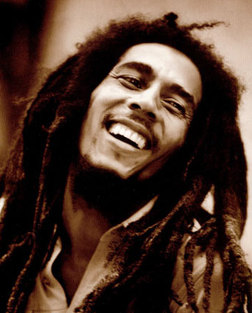
February 5, at 3 p.m. – Wailin’ Soul: Bob Marley and the African-American Connection
A 60-minute music rich special on Bob Marley and how African American music influenced him and Reggae music.
February 11, at 6 p.m. – Sly and the Family Stone Special
A one-hour music intensive radio documentary about the music and legacy of Sly and the Family Stone. Family Affair is hosted by Ben Fong-Torres, and includes a wide range of Sly and the Family Stone tracks – from the big hits (“Dance to the Music,” Everyday People,” and others) to deep cuts from all their albums. Some songs accentuate the points made by the many interview subjects, others speak for themselves. All of them stand up as examples of Sly Stone’s “watershed point in the development of rhythm and blues,” as detailed by biographer and journalist Joel Selvin.
Band members Rose Stone, Larry Graham, Greg Errico and Andy Newmark provide rarely-heard, first-hand accounts of the zeniths and nadirs of Sly Stone’s universe, taking us from their family roots to their mainstream success to later sessions “surrounded by really crazy people…out there in the twilight zone. Musicians Isaac Hayes and Chuck D break down how music from all those episodes influenced Sly’s contemporaries, as well as future generations of musicians.
February 19, at 7 p.m. – Duke Ellington’s Jump for Joy
In an age when the film and theater industries presented African Americans primarily as servants and porters, as fearful and clowning stereotypes, Duke Ellington dared to produce and grace a musical with the same dignity, wit, beauty, and unabiding hipness that he always brought to his band. Jump for Joy is a cultural milestone and another example of how this great American composer traversed the racial and aesthetic boundaries of his time. It was an all-black musical revue that Ellington said “would take Uncle Tom out of the theater and say things that would make the audience think.” The inspiration came from a late-night party, a convergence of Hollywood glamour and nascent civil-rights activism with one of America’s greatest jazz orchestras.
February 25, at 9 p.m. – Remembering Etta James and Johnny Otis
WNCU will pay tribute to two great musicians, Etta James and Johnny Otis, on Saturday, February 25, at 9 p.m. In this hour of The Blues & Beyond, we remember two greats, whose lives and careers actually intersected. Songstress Etta James died on January 20 at age 73. Blues performer Johnny Otis died at age 90 on January 17. James, one of the greatest R&B singers of all time, was discovered by Otis in the early 1950s. He produced her first hit, a record considered too risqué for radio called “Roll With Me Henry,” an answer song to Hank Ballard’s banned “Work With Me Annie.” Otis and James retitled it “The Wallflower” and managed to get it on the radio, and also to reach #1 on the Billboard R&B charts. Etta James went on to a troubled but successful career. Otis did everything in music, played, led bands, wrote, produced, scouted talent and owned a label. We’ll only scratch the surface, but at least we’ll manage to do that, in this hour of The Blues & Beyond.
The 8th Annual Valentine’s Day Jazz Concert will take place on Sunday, February 12, at 4 p.m., in Duke University’s Reynolds Industries Theater. The concert will feature the Duke Jazz Ensemble, North Carolina Central University Jazz Ensemble and UNC-Chapel Hill Jazz Ensemble. General admission is $15, students and senior citizen admission is $10. For more information, call 919-684-4444 or visit www.tickets.duke.edu.
The “Matriarch of the Blues” has died. Music legend Etta James died Friday morning at Riverside Community Hospital in California of complications from leukemia. She was 73.
She was born Jamesetta Hawkins in Los Angeles in 1938. Her first manager and promoter cut up Jamesetta’s name and reversed it: Etta James.
Her talent was discovered when she was 14 — the same age her mother was when James was born. Within three years, the foster-home runaway had her first hit, with the girl group The Peaches. Back then, “Roll With Me Henry” was deemed too racy for radio, “roll” being a sexual euphemism.
Etta James was still a minor when she toured with Little Richard. Then, she signed with leading blues label Chess Records and bleached her hair platinum blond.
“What I was doing was trying to be a glamour girl,” she told NPR’s Fresh Air in 1994. “Because I’d been a tomboy, and I wanted to look grown and wanted to wear high-heeled shoes and fishtail gowns and big, long rhinestone earrings.”
Darkness Beneath The Joy
James had grit in her voice that could melt like sugar or rub like salt in a wound. Between 1960 and 1963, she had 10 records on the R&B charts, including “Something’s Got a Hold on Me.”
Darkness runs beneath that joy — as does anger, says David Ritz, who wrote a biography of James.
“It isn’t like she sings that song,” Ritz says. “Sometimes, you feel she was going to war with the song.”
By the mid-1960s, James was into hard drugs, and her career hit the skids. She bounced checks, forged prescriptions and stole from her friends. A judge finally gave her a choice: prison or rehabilitation. In 1974, she spent months in recovery at a psychiatric hospital.
“I was around nothing but a lot of white kids,” James told Fresh Air. “They were all younger than I was. I remember on Saturdays, they would play rock ‘n’ roll records and I would say, ‘That music is really happening.’ My song, ‘I’d Rather Go Blind’ — they had a version by Rod Stewart, and they kept saying, ‘This is the song you wrote!’ And I’d say, ‘All right!’ ”
Keith Richards of The Rolling Stones sent James a letter while she was in rehab and invited her to tour with the band if she stayed clean. In 1978, she joined the Stones on tour. By the ’90s, she’d reached a new generation of fans and won a Grammy. The next challenge was jazz.
“[Jazz] was too disciplined and too confining,” James said on Fresh Air. “I thought you had to be bourgeois to do that. I was a sloppy kid, wanted to be just wild. I think it took me maturing.”
James said making her tribute to Billie Holiday, 1994’s Mystery Lady, also honored her mother, who loved both Holiday and jazz. She said it helped make peace with the woman she idolized, and who had abandoned her.
It’s often said of Etta James that you could hear her whole life in her voice. James told NPR in 1989 that that made sense, though she mostly sang for herself.
“When I sing for myself, I probably sing for anyone who has any kind of hurt, any kind of bad feelings, good feelings, ups and downs, highs and lows, that kind of thing,” she said.
Etta James went to extremes, and owned them in her life, and in her music.
To those who might hope for someone with Martin Luther King Jr.’s stature and charisma to come along and lead the fight for justice, equality and economic fairness, Charlie Nelms offers this urgent advice: Stop waiting and get to work.
“All of us must take personal responsibility to fight for human rights and human survival,” the North Carolina Central University chancellor said, speaking at the university’s Martin Luther King Jr. Day Convocation on Thursday. “We cannot wait for someone else to take the lead.”
In his address to a standing-room audience in NCCU’s B.N. Duke Auditorium, Nelms urged students, faculty, staff and other members of the community “to reflect on how Dr. King and his work remain relevant in 2012.” And then he added, “Unfortunately, it’s not hard to do.”
Nelms repeatedly drew parallels between the challenges faced by King in the 1950s and 1960s and those of the present day.
“Instead of poll taxes or showing proof of property ownership to vote, we have new photo-ID requirements in 15 states and the list is growing,” he said. Such laws disproportionately affect the poor and the elderly, he noted, because many of them lack the most common form of photo ID, a driver’s license. And although many politicians claim that photo ID laws are needed to combat voter fraud, “No state has been able to document any significant evidence of voter fraud — and if there was any, they would have found it.”
The civil rights movement focused on equality of opportunity and equality under the law, Nelms said, but once the Civil Rights Act of 1964 and Voting Rights Act of 1965 had become law, King didn’t stop. “He moved beyond the lunch counter to address workers’ rights, unemployment, education, economic opportunity, healthcare and, especially, poverty.” His assassination in April 1968 occurred as he was organizing a new march on Washington for what he called the Poor People’s Campaign.
“Notice it was called the ‘Poor People’s Campaign’ — not the ‘Poor Black People’s Campaign,’ Nelms said. “This was what was so radical and dangerous. Thousands of poor black and white people were scheduled to march together to demand jobs, unemployment insurance, a fair minimum wage and education. Does this sound familiar to you? It should.”
Nelms exhorted the audience to become agents of change and emphasized the civil rights leaders’ persistence above all else. “In their pursuit of justice, King and the civil rights marchers did not let police dogs, nightsticks, fire hoses nor the fear of jail deter them in their march for justice. They persisted even in the face of death.”
“Finally,” he said, “never lose hope. Never, never, ever give up.”
Hezekiah Griggs III, self-made multimillionaire at age 22, will present “Realize your Potential” on Feb. 7, at 7 p.m., Miller-Morgan Auditorium. Click here to learn more.
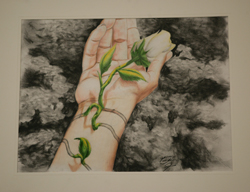
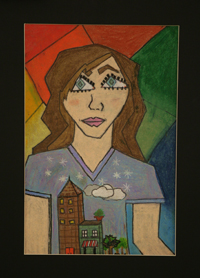
The North Carolina Central University Art Museum is once again showcasing the work of Durham’s best and brightest young artists. “Durham’s Finest,” an annual exhibit of art created by Durham Public Schools students, will open on Sunday, Jan. 22, at 2 p.m.
“Durham’s Finest” comprises works by 220 students in kindergarten through 12th grade. “This unique show is the school system’s only district-wide art exhibit,” said Mary Casey, director of K-12 arts education for the school district. “It shows the progression and artistic development of the students.”
At a reception on Sunday, Casey and Kenneth Rodgers, director of the art museum, will present awards to several student artists. “Hosting the exhibit allows the museum to give students the rare opportunity to see their artwork in a real museum setting,” said Rodgers. A string quartet from Jordan High School, under the direction of Wendy Davidson, will perform. The exhibit will run until Feb. 10.
The NCCU Art Museum is open Tuesday through Friday from 9 a.m. to 4:30 p.m. and Sundays from 2 to 4 p.m. For more information, call the NCCU Art Museum at 530-6211. Admission is free.
Image #1: “Ascending to Heaven” by Brandon James
Southern High School, Grade 12
A section of the F.W. Woolworth & Co. lunch counter at which sit-in protests took place in Durham in 1960 will be rededicated in a ceremony at North Carolina Central University on Sunday, Feb. 5, in one of a series of Black History Month observances at the university.
The anti-segregation sit-ins in downtown Durham began Feb. 8, 1960, following by one week the similar protests in Greensboro. The Durham campaign was organized by the NAACP chapter at North Carolina College (now NCCU), led by students Lacy Streeter, Callis Brown, Robert Kornegay. Also taking part were students from the Bull City Barber College, DeShazor’s Beauty College and Hillside High School.
The protests caught the attention of Dr. Martin Luther King Jr. and the Rev. David Abernathy. At the request of the Rev. Douglas Moore, a local civil rights leader, the two national leaders came to Durham and visited the Woolworth’s lunch counter on Feb. 16. The store closed the counter after the sit-in demonstrations, and the students continued the protests at other stores.
On the evening of Feb. 16, Dr. King drew a standing-room crowd at White Rock Baptist Church, where he delivered his famous “Fill up the jails” speech, in which he advocated nonviolent confrontation with segregation for the first time in the South.
The Woolworth store closed in 1994, but the lunch counter was saved from salvage collectors by John Friedrick, then executive director of the N. C. School of Science and Mathematics. A portion of the counter was donated to NCCU in June 1999. Last fall it was moved from its previous location in the William Jones Building to the James E. Shepard Memorial Library, where it will be the centerpiece of a permanent civil rights movement exhibit.
The rededication event on Feb. 5 will be at the Shepard Library starting at 3 p.m. It will begin with a panel discussion, “Looking Back While Moving Forward,” moderated by Dr. Freddie Parker, professor of history at NCCU and chair of the N.C. African-American Historical Commission.
The discussion panelists will be Dr. Courtney S. Ferguson, a retired NCCU business professor; Vivian McCoy, a civil rights and community activist; Virginia Williams, who as a teenager participated in the Royal Ice Cream Parlor sit-in in Durham in 1957, one of the first such civil rights protests; and NCCU student leader Cassandra S. Stokes. The dedication ceremony and a reception will follow.


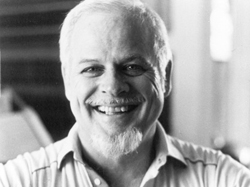 Composer, arranger and pianist Clare Fischer died Thursday, Jan. 26, his website has announced. He was 83. The L.A. Times reports that he died of complications from a heart attack suffered two weeks ago.
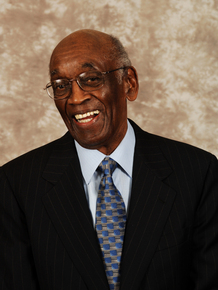 This weekend, we learned that the jazz businessman John Levy died on Friday. His wife, Devra Hall Levy, announced the news on Saturday in a press release available on John Levy’s website,
 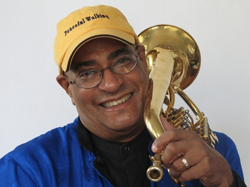 In 1974, trumpeter Jimmy Owens helped prepare and played on a Carnegie Hall concert of Thelonious Monk’s music. On the night in question, the orchestra featured a surprise soloist: Monk himself. It was one of the pianist’s last public performances. Thirty-eight years later, Owens has just been honored as a Jazz Master by the National Endowment for the Arts, and he has a new album of Monk compositions arranged for seven players, called The Monk Project.
 Music Programs
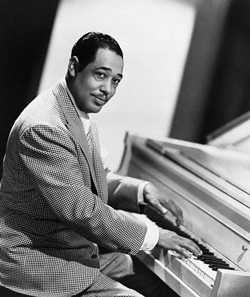 February 19, at 7 p.m. – Duke Ellington’s Jump for Joy
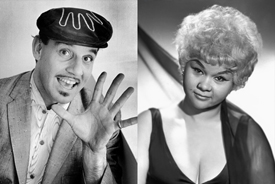 February 25, at 9 p.m. – Remembering Etta James and Johnny Otis
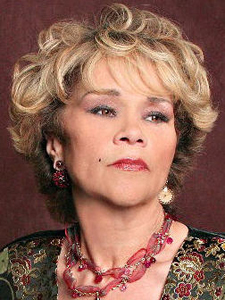 The “Matriarch of the Blues” has died. Music legend Etta James died Friday morning at Riverside Community Hospital in California of complications from leukemia. She was 73.
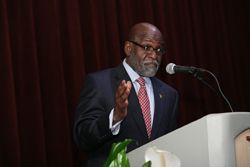 To those who might hope for someone with Martin Luther King Jr.’s stature and charisma to come along and lead the fight for justice, equality and economic fairness, Charlie Nelms offers this urgent advice: Stop waiting and get to work.
 The North Carolina Central University Art Museum is once again showcasing the work of Durham’s best and brightest young artists. “Durham’s Finest,” an annual exhibit of art created by Durham Public Schools students, will open on Sunday, Jan. 22, at 2 p.m.
 education for the school district. “It shows the progression and artistic development of the students.”
 Image #2: “City Girl” by Autumn Mullin